

If you are planning a local move, you probably want one thing more than anything else: a number you can trust.
Most people start with the same questions.
How much do movers cost per hour?
How many hours will my move take?
Will I get hit with surprise fees after the truck arrives?
This guide is built for budget focused homeowners and renters who want clear pricing information without the fluff. You will learn typical hourly ranges, what changes the total, and how to estimate your move in a way that feels realistic.
Along the way, we will also share a simple way to reduce your hours, because lower hours usually means a lower bill.
How Much Are Moving Costs Per Hour?
The short answer
For many local moves, hourly pricing is based on a crew size and the truck, then billed by the hour. National averages vary widely by market, but a common starting point is an hourly rate per mover, often in the range of about $38 to $75 per mover per hour for local moves, with total crew rates rising as you add movers.
That range is not meant to be a quote for your move. It is a baseline so you can do the math and ask better questions when you call for estimates.
Why movers charge by the hour
Hourly pricing is popular for local moves because it is straightforward.
- Time and labor are easy to track. You can see the crew working and you can understand what you are paying for.
- Local moves vary. A small apartment with an elevator can go fast. A small apartment with three flights of stairs can take longer.
- You can control the timeline. If you are fully packed and ready, the job often finishes sooner.
Many customers like hourly pricing because it feels more transparent than a single number with no explanation. National consumer advice sites also note that the total cost of hiring movers is influenced by multiple factors, including the time required to complete the move.
Average Moving Costs Per Hour by Crew Size
This is the section most people want first. The goal is not to memorize a rate. The goal is to understand how crew size changes cost and time.
A helpful way to think about it is this:
- A bigger crew often costs more per hour
- A bigger crew often finishes faster
- The best value is usually the crew size that matches your home size and access conditions
Below are practical ranges you will commonly see referenced in national pricing discussions, including per mover ranges and combined crew ranges.
Two movers and a truck
This is the most common setup for small local moves.
Best for:
- Studio or one bedroom apartments
- Small condos
- Partial home moves
- Light furniture and fewer bulky items
Typical hourly range:
Rates vary, but many markets land somewhere around $95 to $200 per hour for two movers and a truck, depending on location, demand, and what is included.
What this could look like in real life
If your move takes four hours and your crew rate is $150 per hour, your labor portion is:
4 hours × $150 per hour = $600
Then you add any travel time, supply charges, or specialty fees if they apply.
Three movers
Three movers can be a smart upgrade when you want the move done faster or you have heavier items.
Best for:
- Two bedroom homes
- Condos with stairs
- Homes with bulky furniture
- Moves with a tight timeline
Typical hourly range:
A three person crew often lands higher than a two person crew, but the time savings can reduce your total. Many pricing guides still place common total hourly rates in the general local moving band of roughly $95 to $200 per hour depending on crew size and region.
Value tip
If you have a large sectional, multiple dressers, or a lot of boxes, the third mover can prevent bottlenecks. The crew loads while someone wraps and stages items. That can reduce wasted minutes.
Four movers
Four movers is typically used for larger homes and larger loads.
Best for:
- Three bedroom homes and larger
- Longer local days
- Homes with multiple floors
- Lots of furniture, lots of boxes, or both
A useful industry reference point
A widely cited example from Moving.com references an average intrastate move using four movers at around $200 per hour, attributed to the American Moving and Storage Association in that guide.
You might see higher or lower rates depending on your region and the specifics of your move, but the point is clear: bigger crews often have a bigger hourly number.
Quick cost examples by home size
These are simplified examples that assume you are already packed. If packing is included, hours usually rise.
Studio or small one bedroom
- Crew: two movers
- Time: three to five hours
- Rough labor range: $285 to $1,000 depending on rate and hours
Two bedroom
- Crew: two or three movers
- Time: four to seven hours
- Rough labor range: $400 to $1,400 depending on rate and hours
Three bedroom
- Crew: three or four movers
- Time: six to ten hours
- Rough labor range: $900 to $2,000 plus potential fees
If you want a quick reality check, HomeAdvisor reports a national average cost to hire professional movers and a typical range for local moves, showing how widely totals can vary even before you factor in special circumstances.
Local Moving Costs Per Hour vs Flat Rate Pricing
Hourly pricing is common for local moves, but you may also hear about flat rates. Both can be fair. The best fit depends on your move.
When hourly pricing makes sense
Hourly pricing is often ideal when:
- You are moving within the same city or nearby
- Your inventory is moderate and predictable
- You want flexibility if your timeline changes
- You want to reduce cost by doing prep work yourself
This is why people searching for Local Moving Costs Per Hour usually want help estimating time. Hours drive the total.
When flat rate pricing may apply
Flat rate pricing is more common when:
- The job scope is large and easy to define
- The move involves long distance mileage
- The move requires special handling and planning
- The company is bundling services like packing, storage, and materials
Some movers still price local moves hourly, but use a flat rate for bigger projects. Either way, a clear written estimate and a clear explanation of what is included matters more than the pricing format.
Which is better for budget focused movers?
If your main goal is budget control, hourly pricing is often easier to understand. You can ask questions like:
- What is included in the hourly rate?
- Is travel time billed?
- What is the minimum number of hours?
- Are packing materials billed separately?
- How do you handle stairs and long carries?
Those questions help you avoid surprise charges.
What Impacts Moving Costs Per Hour?

Two moves can have the same home size and end up with different totals. These factors usually explain why.
Size of your home and amount of stuff
More items means:
- More trips to the truck
- More wrapping and protecting furniture
- More time loading and unloading
- More time setting up at the new home
If your garage is full, plan for more hours.
Number of movers needed
Crew size should match the workload. Too small, and the move drags out. Too large, and you may pay for extra hands you do not need.
A good estimate conversation includes:
- Your home size
- Your heaviest items
- Whether you have stairs
- How far the truck can park from your door
Stairs, elevators, and access issues
Access is one of the biggest time drivers.
Common time adders include:
- Three flights of stairs
- Narrow hallways that force awkward angles
- Long walks from the truck to the door
- Elevator reservations that are not available
- Parking restrictions that require the truck to park far away
If you are moving from a condo, ask your building about elevator rules early. It can save you real money.
Distance between homes
Local moves usually involve short drives, but distance still matters.
- More driving time can increase billed time, especially if travel is included
- More miles can increase fuel or travel charges depending on the company
If you are doing a same day move across town, the route, traffic patterns, and parking can still influence time.
Packing services
Packing is a separate time bucket. Even if you are billed hourly for the whole job, packing adds hours.
Packing tends to increase time because:
- Items must be wrapped carefully
- Boxes must be labeled and stacked properly
- Fragile items require extra protection
- Kitchen packing is slow and detail heavy
If you want to control cost, one of the best moves is to pack your kitchen yourself.
Time of month and season
Pricing often rises when demand is high. Many national moving guides recommend moving during off peak periods, since peak seasons can be more expensive.
If you have flexibility, consider:
- Weekdays over weekends
- Mid month over end of month
- Late fall through early spring for lower demand in many markets
How Many Hours Will Your Move Take?
This is where your estimate becomes real. Hourly pricing only helps if you can reasonably predict hours.
Below are typical time ranges many movers use as a starting point. Your actual time depends on access, packing readiness, and load size.
Estimated hours by home size
Studio: two to four hours
One bedroom: three to five hours
Two bedroom: four to seven hours
Three bedroom: six to ten hours
Four bedroom: eight to twelve hours
These ranges include loading, driving, and unloading for a local move, assuming average access and a prepared home.
A simple way to estimate your hours
Use this checklist and add time when items apply.
- Start with the home size range above
- Add one hour if you have stairs
- Add one hour if parking is far or difficult
- Add one to two hours if you are not packed
- Add one hour if you have disassembly or reassembly needs
- Add time for specialty items like safes or pianos
This is not perfect, but it gives you a more realistic number than guessing.
Sample cost scenarios with real math
Scenario A: One bedroom apartment, two movers
- Rate: $150 per hour
- Time: four hours
- Estimated labor: $600
If there is a three hour minimum, you still pay for three hours even if you finish in two and a half.
Scenario B: Two bedroom condo with stairs, three movers
- Rate: $210 per hour
- Time: six hours
- Estimated labor: $1,260
If you had used two movers and taken eight hours, you might have paid:
8 × $170 = $1,360
This is why the cheapest hourly rate is not always the cheapest move.
Scenario C: Three bedroom home, four movers
- Rate: $260 per hour
- Time: eight hours
- Estimated labor: $2,080
That looks like a big number, but a smaller crew might stretch into a second day or run into overtime. Efficiency can protect your budget.
Hidden Fees to Watch For
People worry about hidden fees for a reason. Some extra charges are normal and legitimate. The problem is when they are not disclosed.
Here are the most common cost adders you should ask about before you book.
Travel time charges
Some companies charge portal to portal, meaning from when the crew leaves the office until they return. Others charge only for on site time, then add a separate travel fee.
Ask for the policy in writing.
Minimum hour requirements
A two or three hour minimum is common for local moves. Some guides mention minimums like two to three hours in many markets.
Minimums can be fair. The crew has to schedule the day, drive to you, and prep equipment. You just want to know the rule upfront.
Fuel fees
Some local movers include fuel. Others add a fuel or mileage charge. Ask:
- Is fuel included in the hourly rate?
- Is there a separate mileage rate?
Specialty item fees
Some items require special equipment or extra labor, such as:
- Pianos
- Pool tables
- Oversized safes
- Large appliances going up stairs
If you have one of these, mention it early. Surprise specialty items are a common cause of pricing disputes.
Packing materials and supplies
Even if you pack yourself, movers may use:
- Stretch wrap
- Mattress bags
- Tape
- Furniture pads
Ask what is included, what is optional, and what is billed.
Long carry charges
If the truck cannot park near your door and the crew has to carry items a long distance, some companies charge a long carry fee. Even when they do not, long carries increase time, so your hourly cost rises either way.
How to Reduce Your Hourly Moving Costs
If your goal is a lower total, focus on reducing hours. Here are practical ways to do it.
Declutter before moving day
Less stuff is the fastest way to cut hours.
- Donate furniture you do not use
- Clear out the garage
- Purge closets and kitchen gadgets
- Dispose of broken items
Even a small reduction in volume can shave an hour off the move.
Be packed and ready
If you are paying hourly, packing during the move is expensive. Try to have:
- Boxes sealed and labeled
- Loose items bagged or boxed
- Drawers emptied if required
- Fragile items protected
If you want help, it can still be worth hiring packing support, especially for fragile kitchens. Just plan for the added hours.
Reserve elevators and loading zones
If you live in a building, reserve what you can.
- Elevator access
- Loading zone access
- A spot close to the entrance
This reduces travel distance and reduces wasted minutes.
Move mid week or mid month
If you can choose a quieter time, you may find better availability and sometimes better rates, especially outside peak season.
Choose the right crew size
A common budgeting mistake is choosing the smallest crew to get the smallest hourly rate. A slightly larger crew can finish faster and protect your total.
Real World Example: What a Local Move Might Cost
Let’s make this feel concrete with a realistic local example.
Imagine a homeowner moving from a small house near downtown to a new place a few miles away. The home is mostly packed, but there are a few loose items and some furniture needs disassembly.
This is a common situation for local moving services in San Luis Obispo.
Move details
- Home size: two bedroom
- Crew: three movers
- Access: one set of stairs at the new home
- Load: average furniture, average boxes
- Special items: none
Estimated time
- Loading: two and a half hours
- Driving and staging: one hour
- Unloading: two and a half hours
Total: six hours
Estimated cost
If the crew rate is $210 per hour:
6 × $210 = $1,260
What could raise it
- Not being packed could add one to two hours
- Narrow stairs could slow bulky items
- A long walk to the truck could add time
What could lower it
- Fully packed and labeled boxes
- Clear pathways, clear parking
- Furniture disassembled ahead of time
The point is not the exact number. The point is that you can estimate with logic, not guesswork.
Where We Work
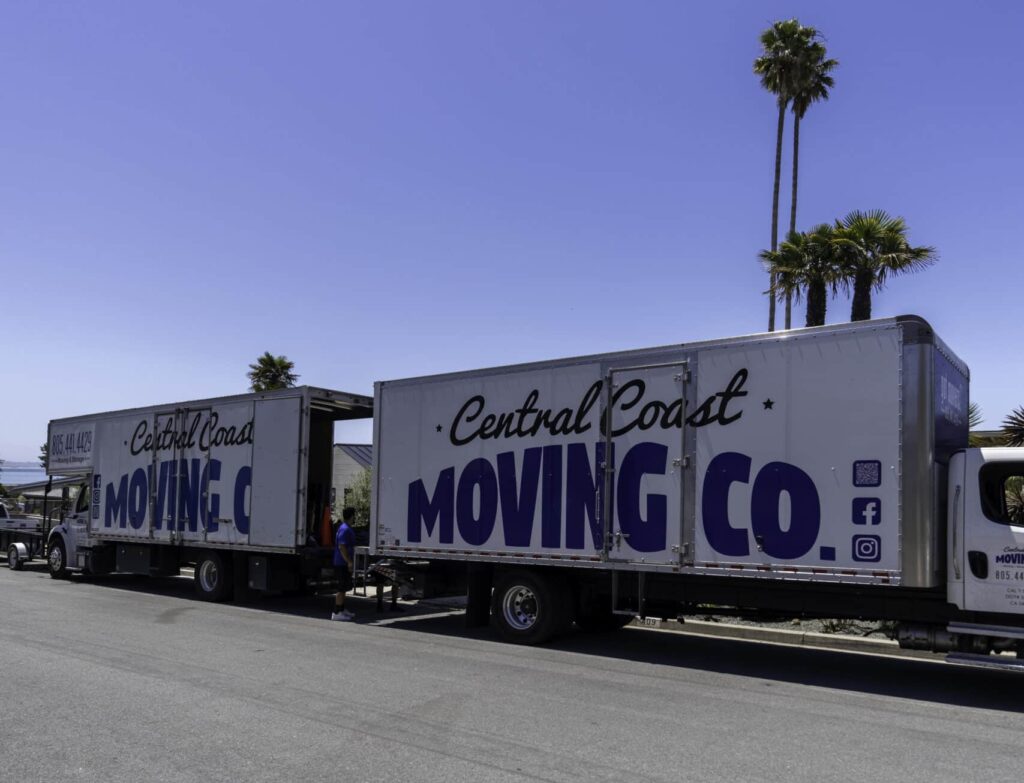
You will get the best pricing guidance when it reflects real local conditions like parking, building types, and driving patterns.
We help families and renters across the Central Coast, including serving Paso Robles and nearby areas, and we often move students and faculty in homes near Cal Poly. If you are planning a local relocation, the fastest way to get an accurate budget is to request a written estimate with clear hourly terms.
That includes crew size, minimum hours, what is included, and what is optional.
Is Hiring Movers Worth the Hourly Cost?
If you are deciding between DIY and hiring movers, look at the full picture.
Truck rental vs professional movers
A DIY move can look cheaper, but costs add up quickly:
- Truck rental
- Fuel
- Mileage
- Insurance
- Equipment rentals like dollies and pads
- The time and physical strain of doing the work
Professional movers bundle labor, equipment, and experience. The benefit is often fewer damaged items and a shorter move day.
Time saved
Time matters. A full weekend of DIY work can become a long week of unpacking fatigue.
A professional crew can often complete in one day what takes many people two days with friends.
Reduced risk of damage
Movers use protection strategies that most people skip:
- Wrapping furniture properly
- Protecting door frames
- Using dollies and straps correctly
- Loading the truck with balanced weight
This matters even more for heavy items and tight staircases.
Avoiding scams and bad actors
Unfortunately, the moving industry has some bad actors. Consumer reporting has warned that disreputable movers can cause major financial pain, and that researching movers, getting written estimates, and understanding who is actually doing the move can reduce risk.
If a deal sounds too good to be true, slow down and verify credentials, policies, and reviews.
Frequently Asked Questions About Moving Costs Per Hour
What is the average moving cost per hour?
National guidance often cites per mover hourly ranges, with one example being $38 to $75 per mover per hour for local moves, and total crew rates rising depending on crew size.
Your local market, home size, stairs, and packing readiness can push your real rate higher or lower.
How many hours do movers usually take?
A rough starting point is:
- One bedroom: three to five hours
- Two bedroom: four to seven hours
- Three bedroom: six to ten hours
Access issues and packing readiness matter as much as home size.
Do movers charge for travel time?
Some do, some do not. Ask the company to explain whether they bill portal to portal, whether they add a travel fee, and whether travel time counts toward minimum hours.
Is it cheaper to move during the week?
It can be. Demand is often lower during weekdays and outside peak season, which can improve availability and sometimes reduce pricing pressure.
How can I estimate my total moving cost?
Use this quick method:
- Choose a likely crew size
- Estimate hours based on home size
- Add time for stairs, long carries, or not being packed
- Multiply hours by the hourly rate
- Add known extras like travel fees or packing materials
Then request a written estimate to confirm assumptions.
Get a Clear Estimate for Your Move
If you are trying to budget a local move, the best next step is a clear estimate that matches your home, your access, and your timeline.
We can help you understand your options, compare crew sizes, and plan a move day that protects your time and your budget. Request an estimate today, and check our moving cost article for additional budgeting tips that can help you plan with confidence.


